As part of Keller Williams ongoing commitment to remaining current with economic and demographic trends that influence our real estate market, we recently invited Dr. Mark Melnik, Director, Economic and Public Policy Research for the Donahue Institute at the University of Massachusetts to be the keynote speaker at an educational event we held in June at the Lenox Hotel in Back Bay. Dr. Melnik’s addressed our Keller Williams agents in addition to realtors from cooperating firms throughout the city who attended as our invited guests. The update given by Dr. Melnik focused on the relevant metrics that define the current state of the Massachusetts economy as well as the challenges that the state faces going forward, including those that have implications for the future health of our real estate market. As the charts shared here with our Stakeholders’ Report readers demonstrate, the Massachusetts economy continues to occupy an enviable position among the 50 states but also faces significant challenges in the years ahead.
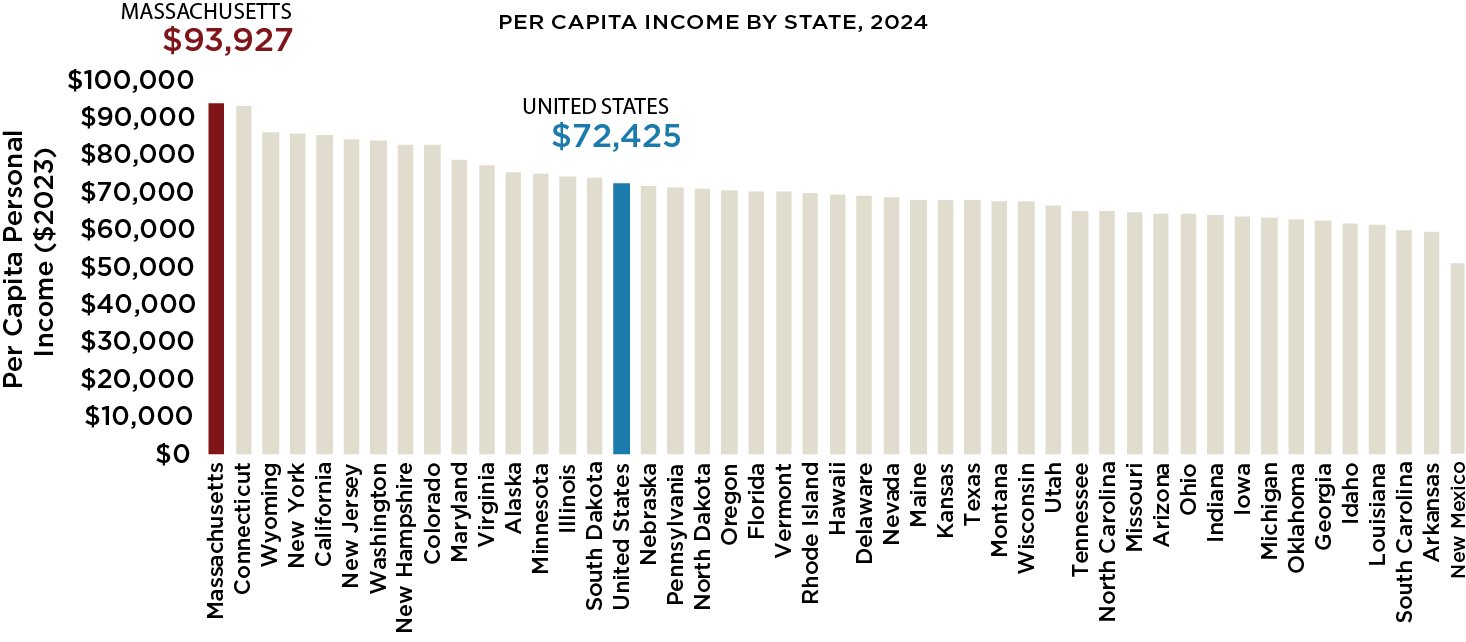
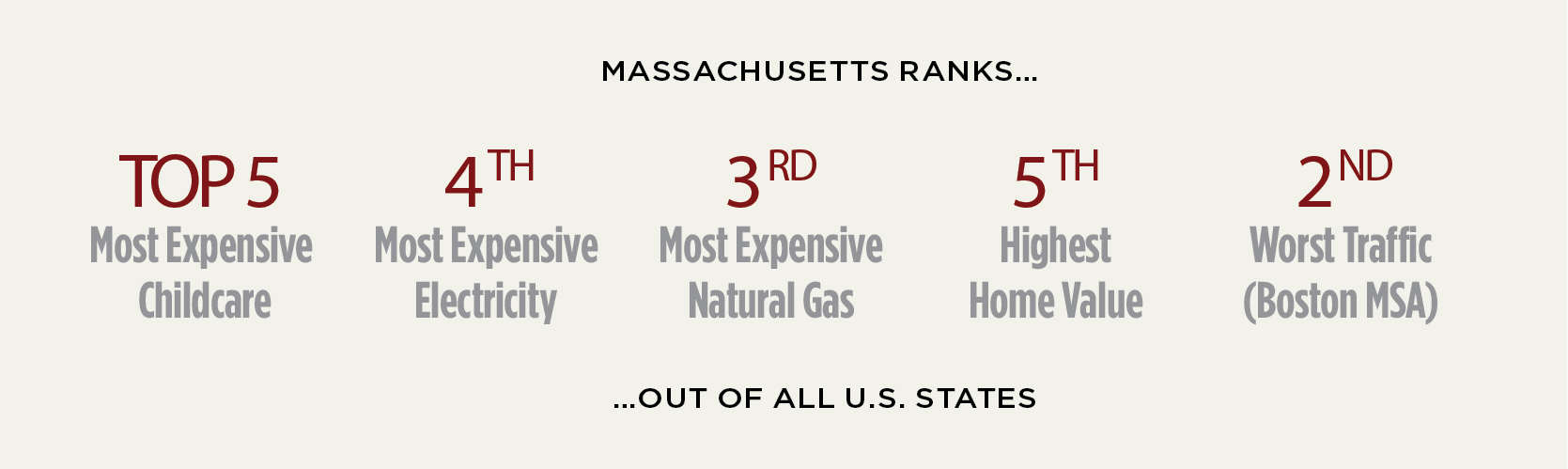
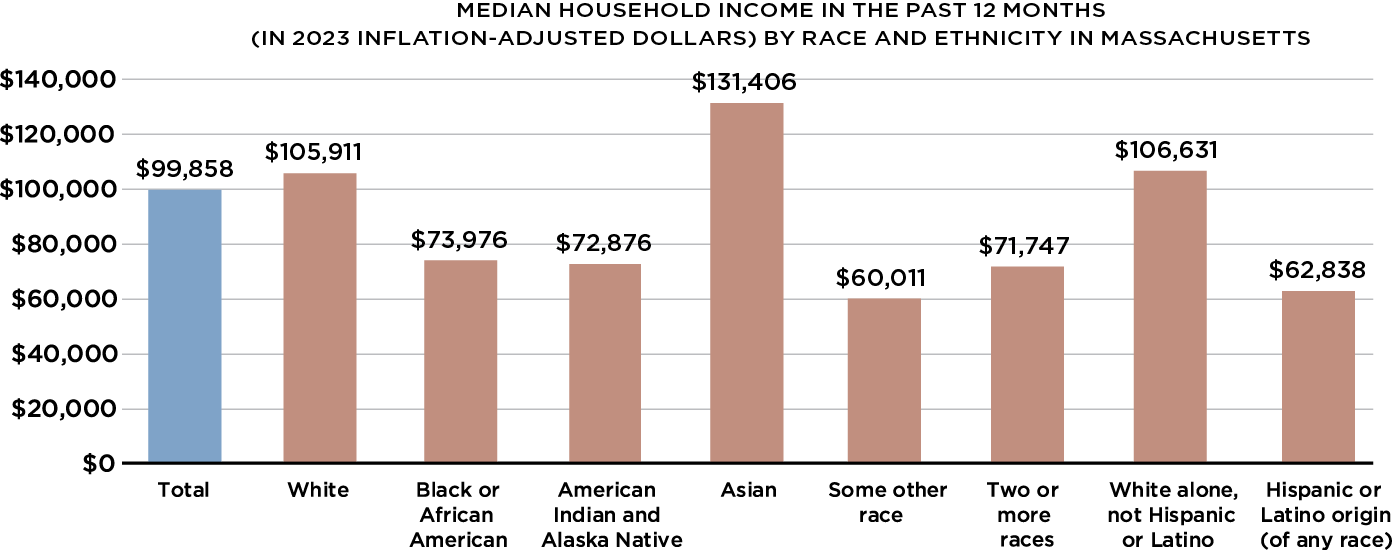
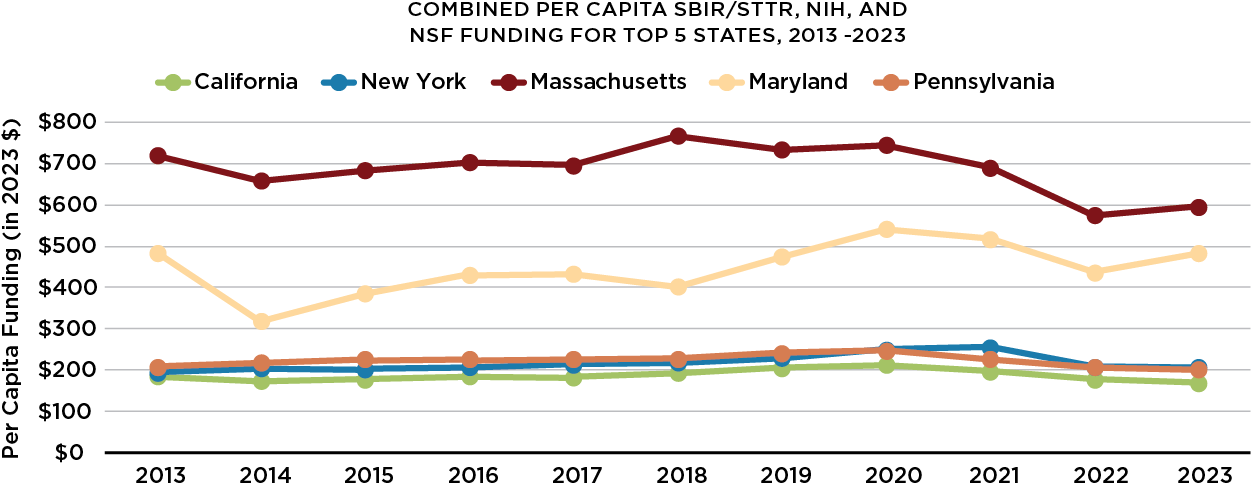
On the plus side, the Bay State has the highest per capita income in the nation and scientific research and development dollars flowing into our economy have doubled in the past decade. In fact, we are number one in research funding among all 50 states. Unemployment claims in the state have dropped to their pre-pandemic levels and we have the highest percentage of college educated people of any state in the country. These factors are among those that have buoyed Boston’s real estate market which according to Zillow has appreciated a total of 17% over the past five years. The Donahue Institute’s research, however, also reveals warning signs for the Massachusetts economy. While incomes are quite high, so is the cost of living and there is great disparity among citizens incomes are quite high, so is the cost of living and there is great disparity among citizens of the Commonwealth in how that income is distributed, Massachusetts residents, both renters and homeowners, are among the most likely to be burdened by the high cost of housing. While we are a magnet for highly educated new immigrants and number one in federal funding for knowledge based sectors for the 30th consecutive year, the current political climate is one in which both human and financial capital flows into the state may slow in the coming years.

Bay State Overview
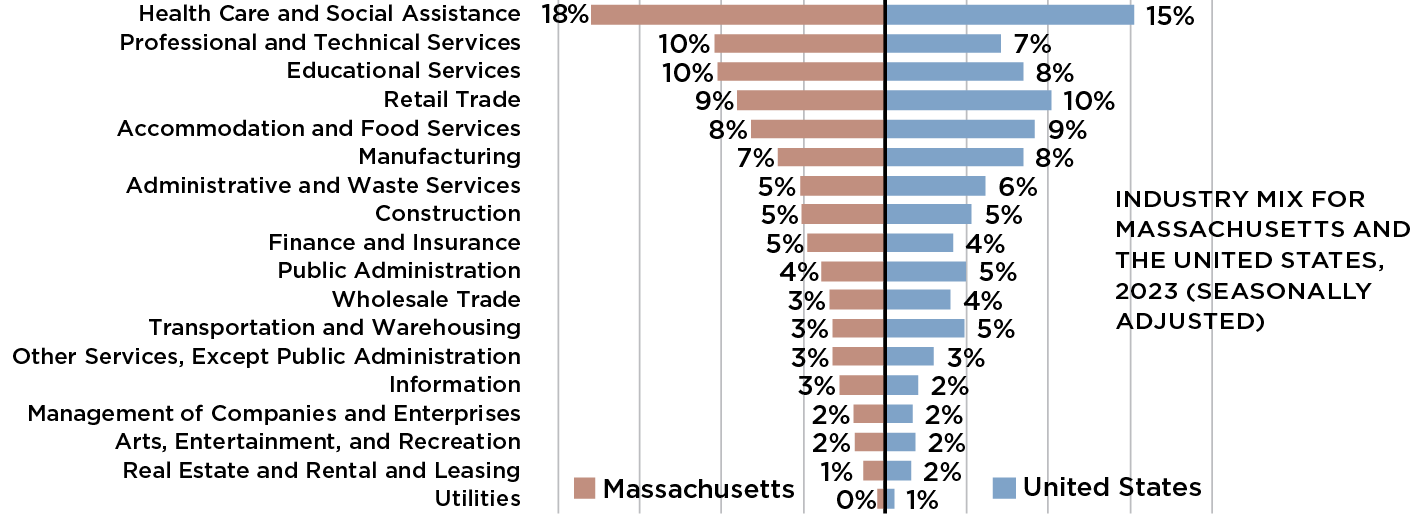
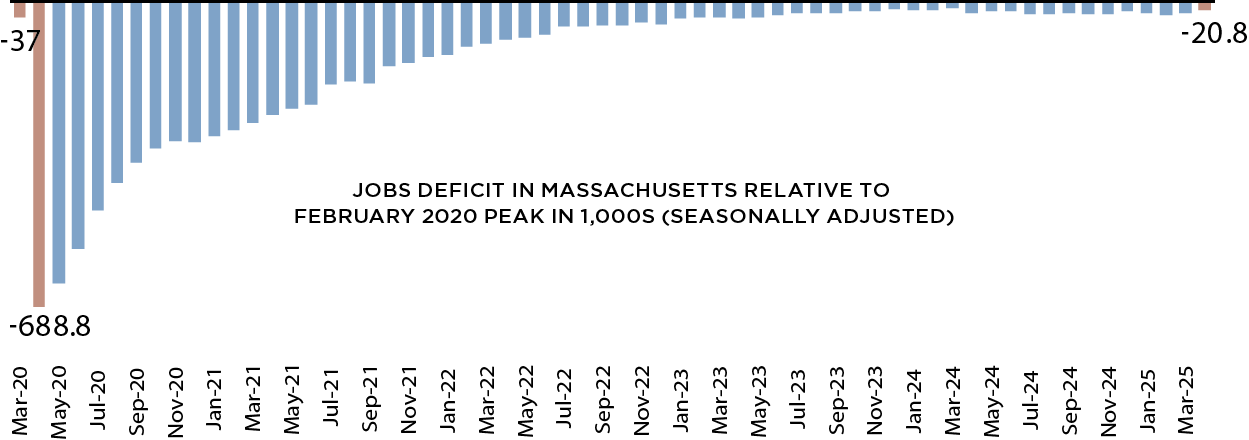
As the below chart illustrates, Massachusetts has a relatively older, more educated and diverse population than the country as a whole. Our population has also begun to rebound, likely reflecting a modest reversal of net out-migration witnessed during the pandemic. It is notable that while Massachusetts’ nominal unemployment rate has declined in the past couple of years, our rank among the states has declined, reflecting relatively anemic job growth overall. In fact, during the 12 month period ending in April of 2025, Massachusetts posted the 5th lowest rate of job growth in the nation. Massachusetts incomes and cost of living are both quite high but with the economic benefits so unevenly distributed, the state is a challenging one in which to live for many people.
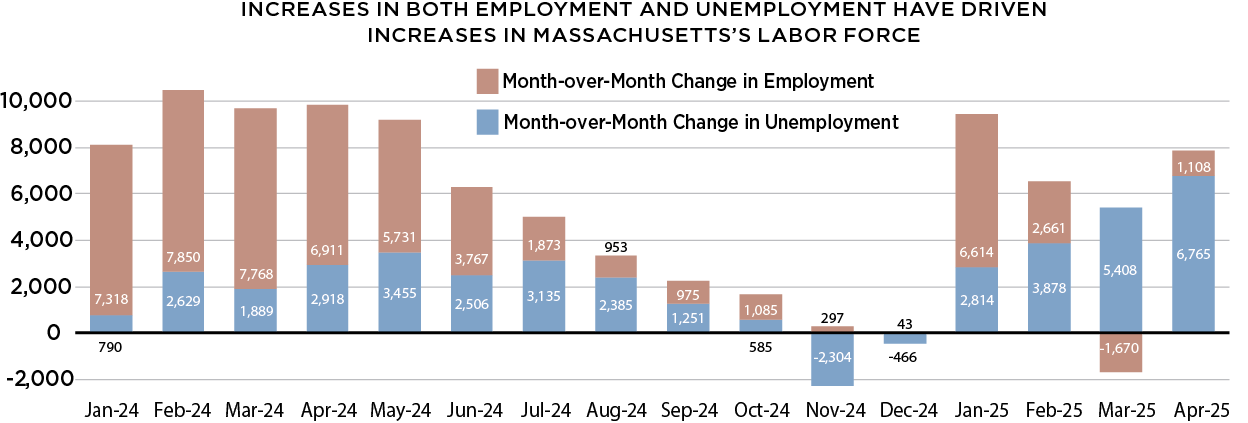
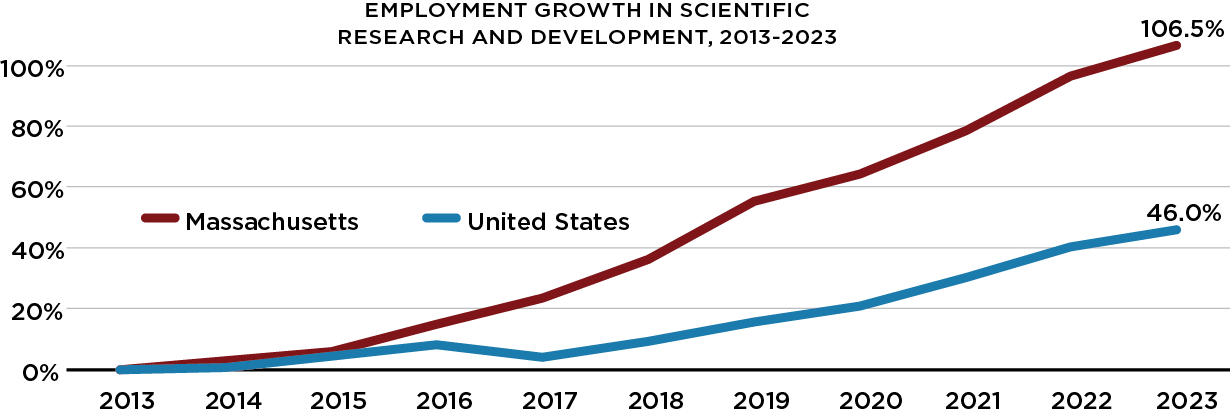
The Massachusetts’ employment picture is actually quite complicated. Perhaps counterintuitively, we are experiencing both higher rates of employment and unemployment simultaneously, reflecting an increase in the labor participation rate. With job openings declining at the same time the knowledge based sector has grown, employment prospects for less educated workers have been weaker. More highly educated workers who tend to enjoy better health and greater longevity are also more likely to work into their later years. Scientific and R&D employment have been disproportionately responsible for the economic growth we have experienced.
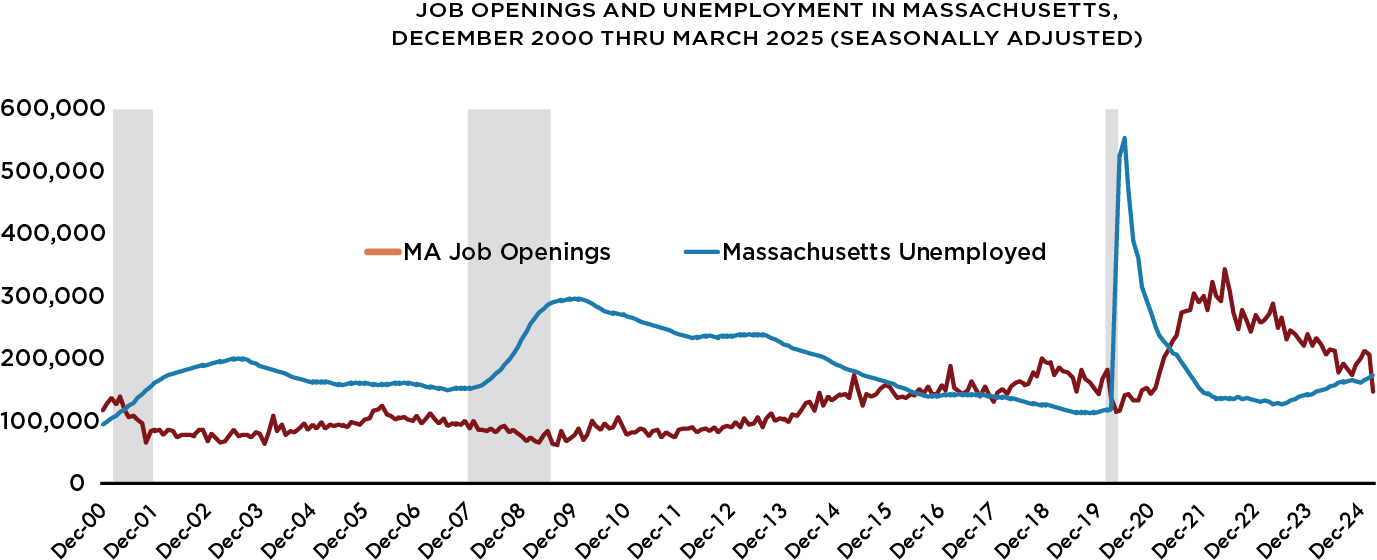
Job openings in Massachusetts have steadily declined. US. Source: Bureau of Labor StatisticsQuarterly Census of Employment and Wages; UMDI analysis.
Jobs & The Economy
The Massachusetts’ employment picture is actually quite complicated. Perhaps counterintuitively, we are experiencing both higher rates of employment and unemployment simultaneously, reflecting an increase in the labor participation rate. With job openings declining at the same time the knowledge based sector has grown, employment prospects for less educated workers have been weaker. More highly educated workers who tend to enjoy better health and greater longevity are also more likely to work into their later years. Scientific and R&D employment have been disproportionately responsible for the economic growth we have experienced.
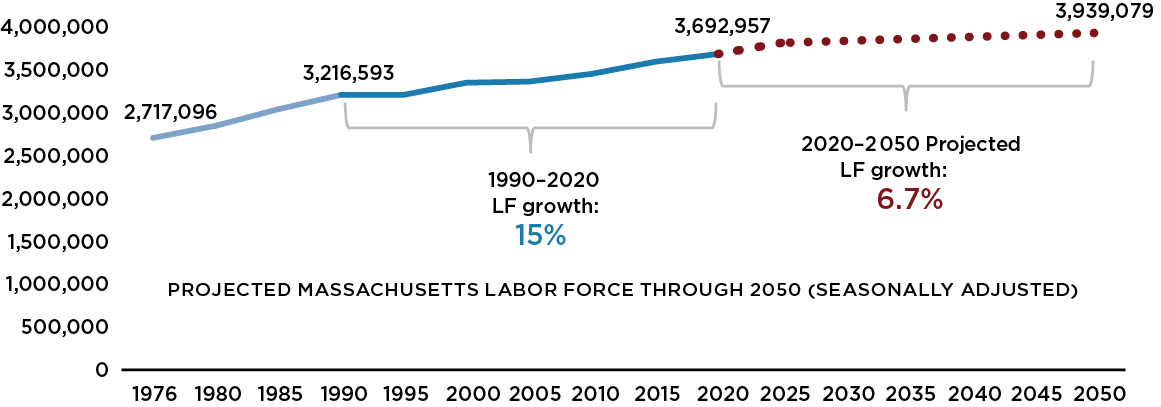
A Graying Labor Force
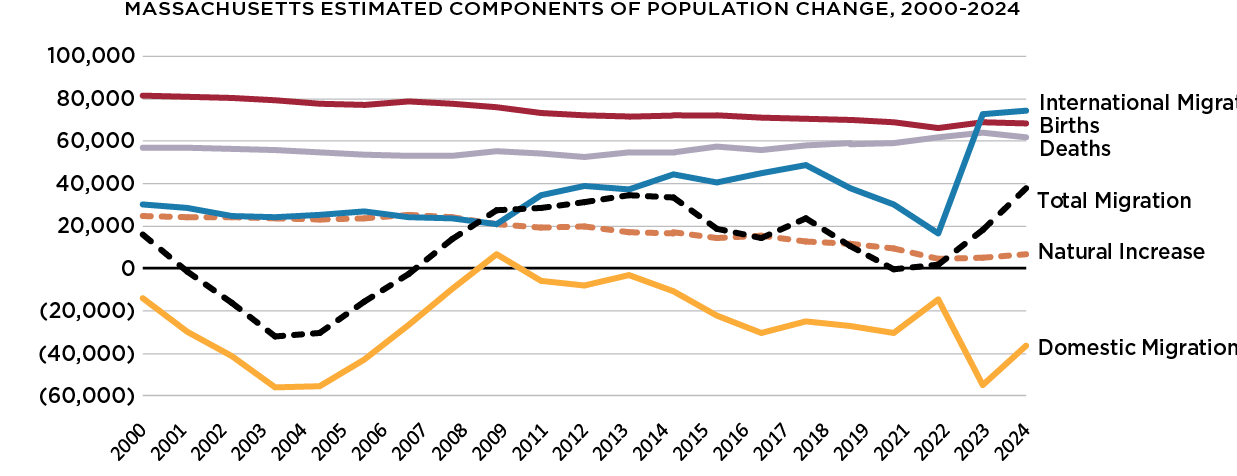
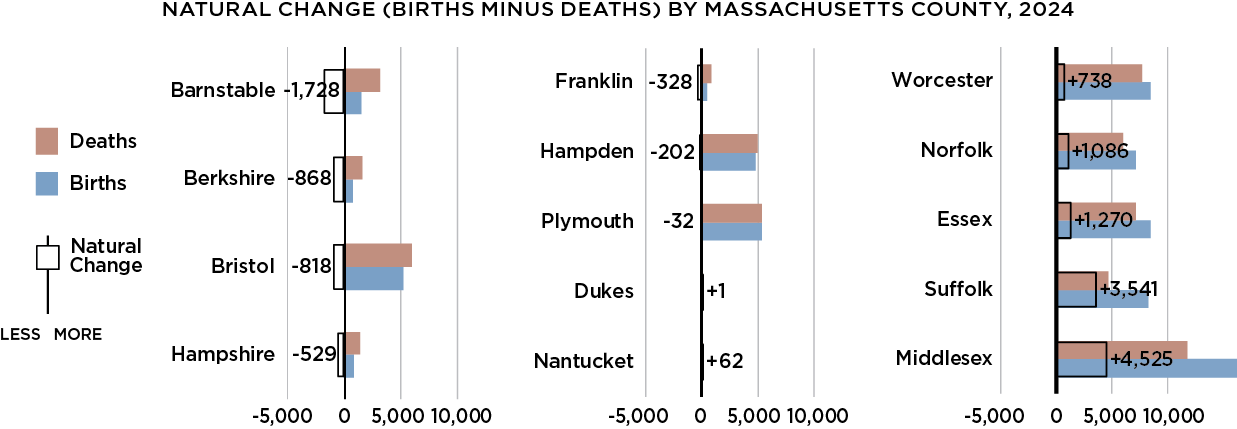
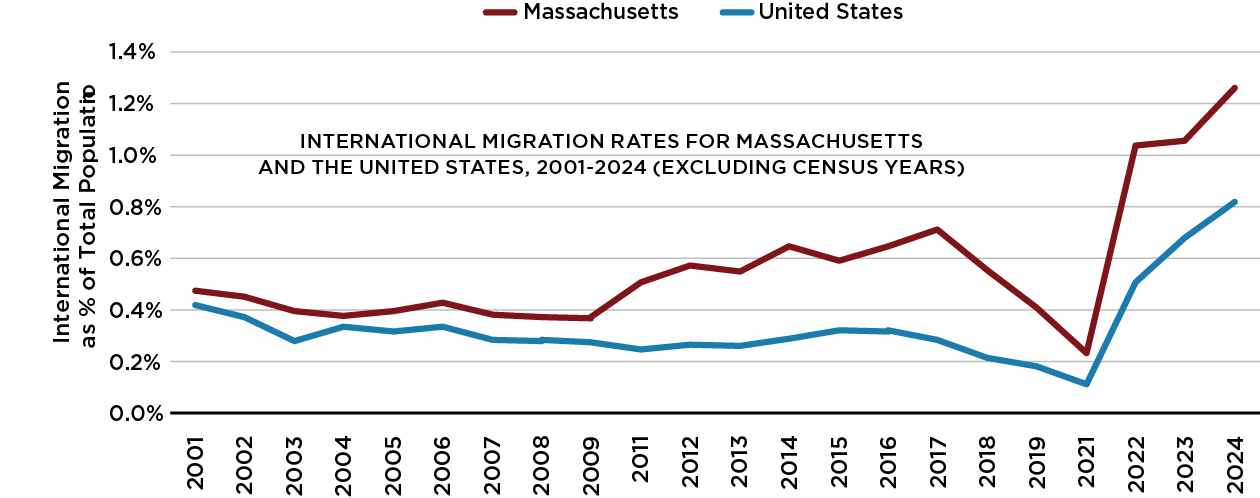
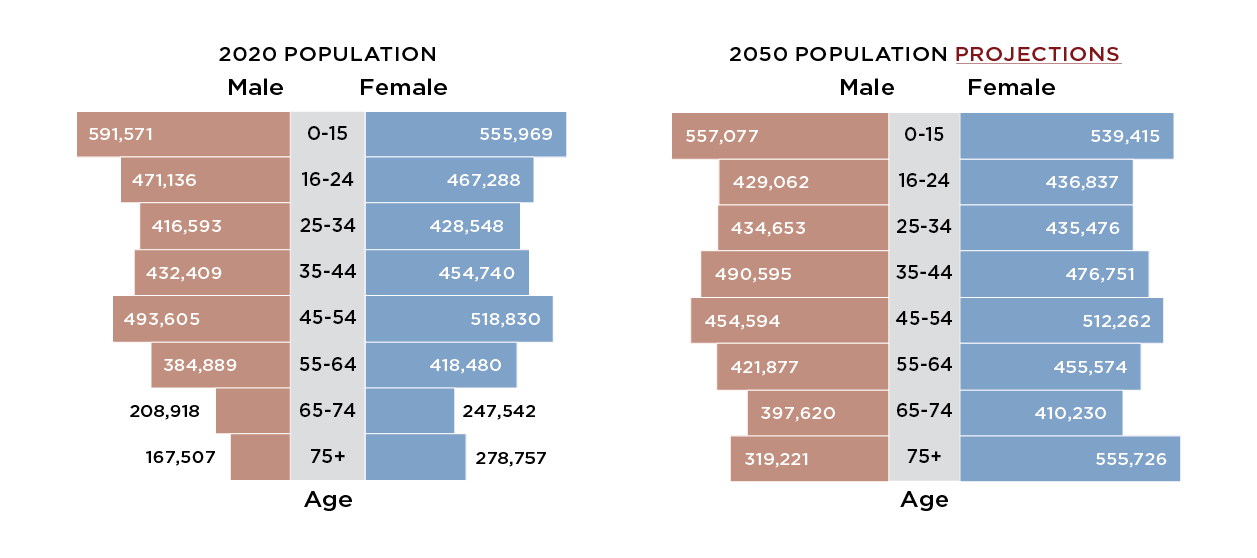
Massachusetts is faced with the prospect of an increasingly graying population. The declining rate of natural births among our citizens has in the past been somewhat offset by net in-migration of highly skilled workers from abroad. As noted previously, the flow of well educated foreign born residents into Massachusetts may not keep pace with what we have experienced in the past.
Implications for Real Estate
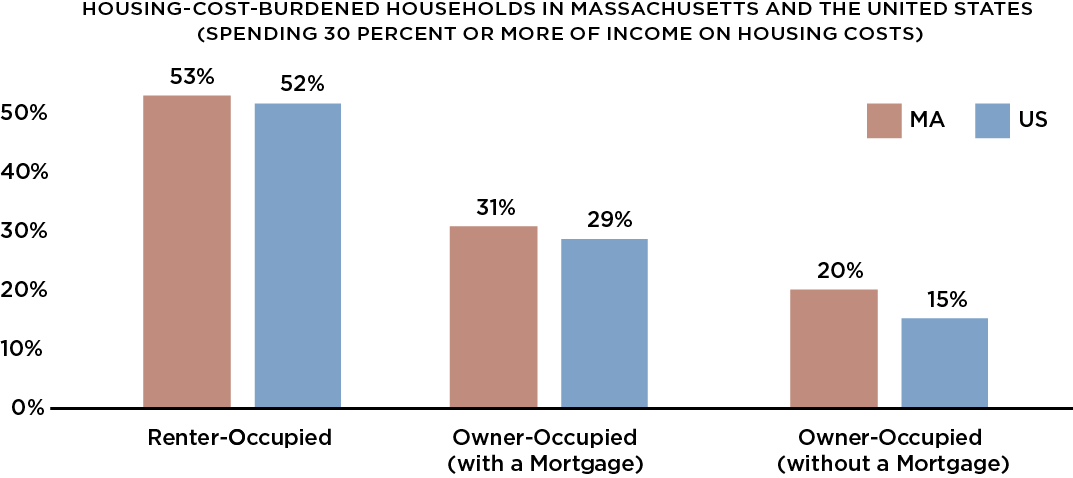
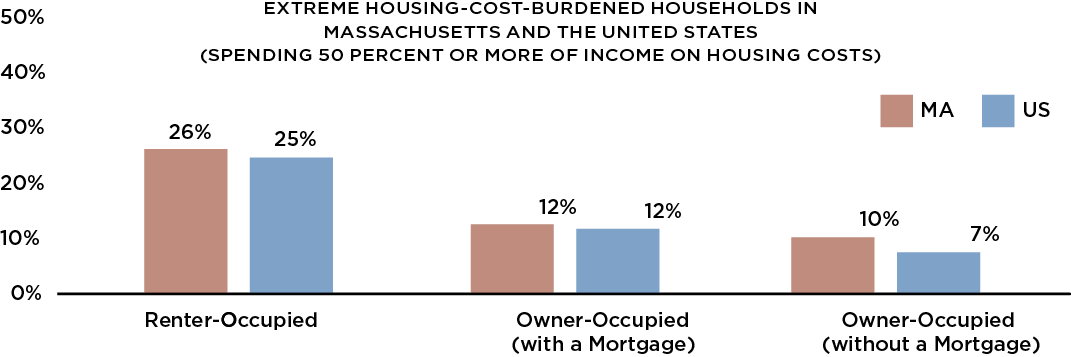
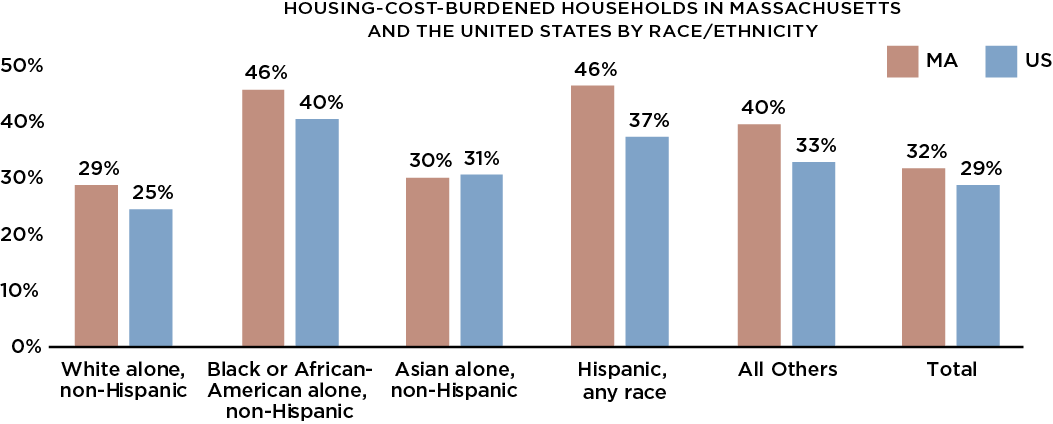
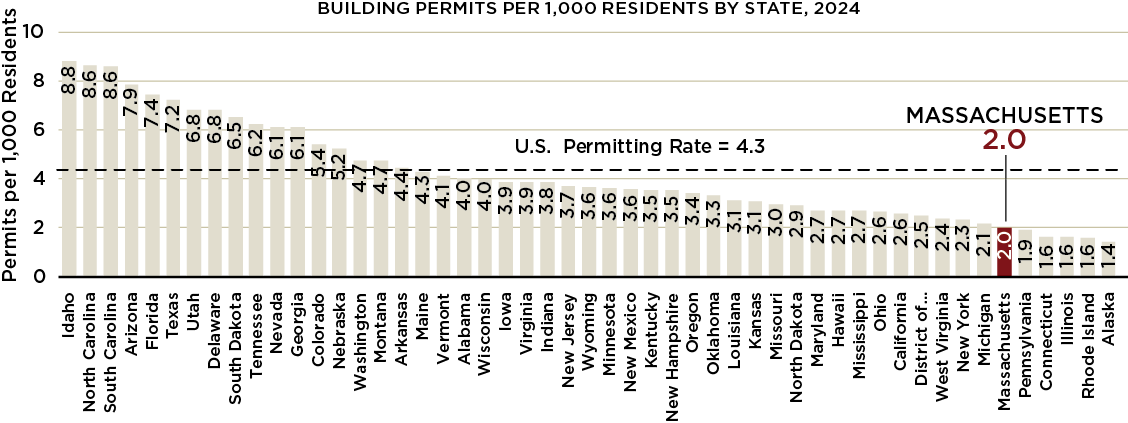
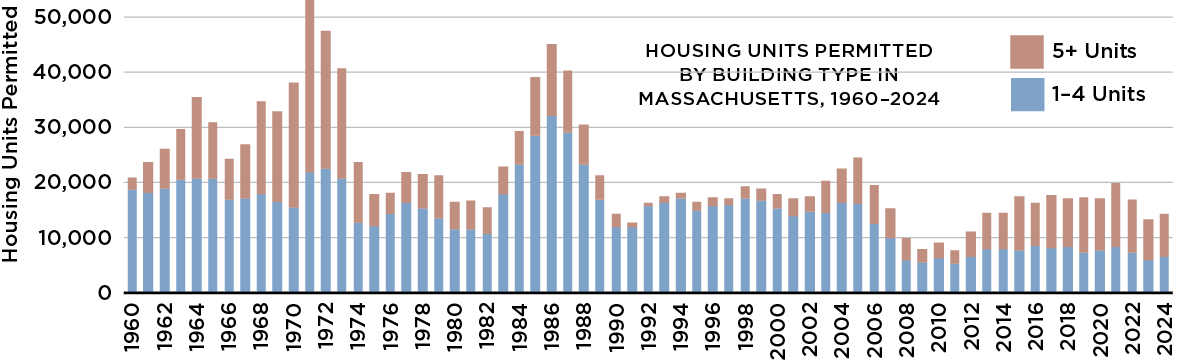
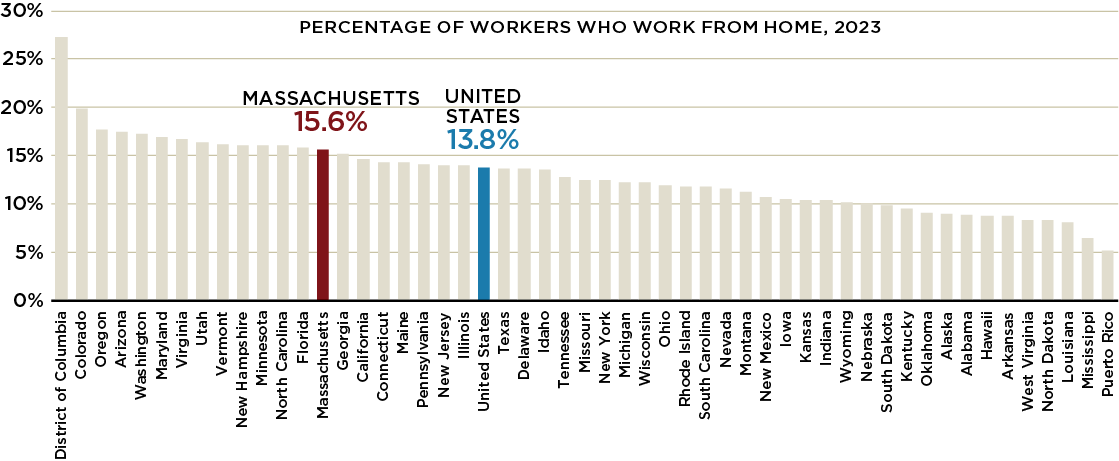
Simply put, the high cost of housing in Massachusetts has the potential to create a drag on the economy going forward. A disproportionate number of Massachusetts residents are burdened by what it takes to live in our state as a percentage of their income. Permitting for new dwellings has not kept pace with demand. Our rate of remote work is also among the higher in the nation, meaning that not everyone employed by MA companies and institutions needs to reside here.
Implications for Real Estate
The research conducted by the Donahue Institute paints a picture of our state as being well positioned as the leader in knowledge based employment and per capita income. Our cost of living, graying population and dependence on international in-migration could pose challenges to our future economic health. The reality is that the Massachusetts economy has somewhat underperformed in the post-pandemic era. Addressing these challenges will require resolve and creativity on the part of our policymakers who must figure out how to streamline permitting and create relatively more affordable housing for the new residents we seek to attract. Senior housing options in particular are too few, even for those who can afford to pay for what they want. Action is already being taken through adoption of new initiatives, one such being the Housing Choice Initiative, which provides grants, technical assistance and regulatory relief. The new MBTA Communities Law requires that MBTA communities allow for more multi-family housing development. The Affordable Homes Act, passed in 2024, authorizes more than $5 billion in spending for affordable housing and supports the conversion of commercial buildings to residential housing as well as the creation of Accessory Dwelling Units (ADUs). (See article on page 22). The culture of innovation and proactivity for which Massachusetts is widely known has served us well in the past and may be precisely what enables us to overcome the challenges that lie ahead.